
Loading...
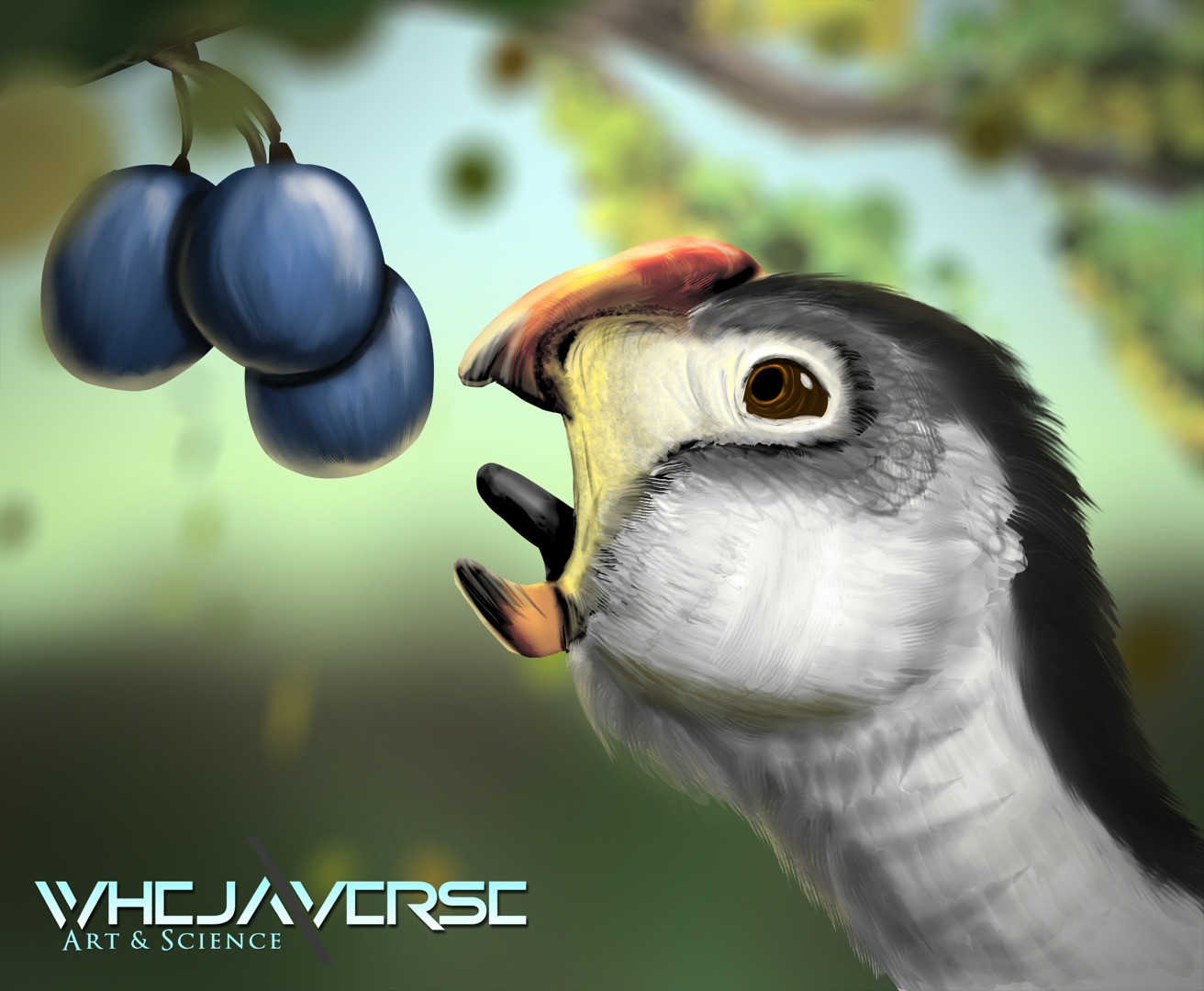
New Dinosaur alert!
This last Sunday, 11 October, a paper was published about a new Oviraptorsaur from the Hell Creek formation. The new animal, labeled Infernogallus jamesi (James' Hell-Chicken), was a small, turkey-like creature that only stood two feet tall at the hip and likely weighed only thirty pounds. The really fascinating thing about it, though, was a fully-articulated fossil of the upper torso and a startlingly-complete skull- a rarity for this group. Alongside having an unusually large eye socket, this skull was very wide for an Oviraptorsaur, and showed signs of musculature developed for a rather complex method of chewing. That, combined with the lack of teeth and gastroliths, suggests that this animal was born to eat something very few others in its environment were taking advantage of: fruit.
For reference, fruit-bearing plants were still somewhat of a novelty by the end of the Cretaceous when Infernogallus lived. As modified flowers, the first fruit had evolved roughly eighty-million years before at the beginning of the Cretaceous, but the forests were still dominated by conifers and cycads for most of that time, and even animals that we've found to have eaten fruit (the earliest example being Jehelornis) were clearly doing so to suppliment a broader diet of seeds and insects. Infernogallus represents one of the earliest examples in both the fossil record and scientific study of adaptations designed specifically for frugivory. Even stranger is that it's in an animal that seems to be tied to the ground (Oviraptorsaurs don't seem to be very good climbers in general), meaning all of its diet would have come either from low-lying plants or fallen fruit during the autumn. The latter has a great deal of evidence, with palm trees and ginkgos being abundant, but the former have proven far more elusive to the fossilization process. Perhaps, even in a paleoenvironent as thoroughly-studied as the Hell Creek formation, there is always something new for us to explore.
